As New York City moves toward a more electrified future, buildings are transitioning away from fossil fuels, electric vehicles are becoming more common, and new developments are placing greater demands on the city’s electric grid. These changes present opportunities to reduce emissions and modernize infrastructure, but also raise questions about how the city will accommodate growing electricity demand and make the transition affordable and accessible.
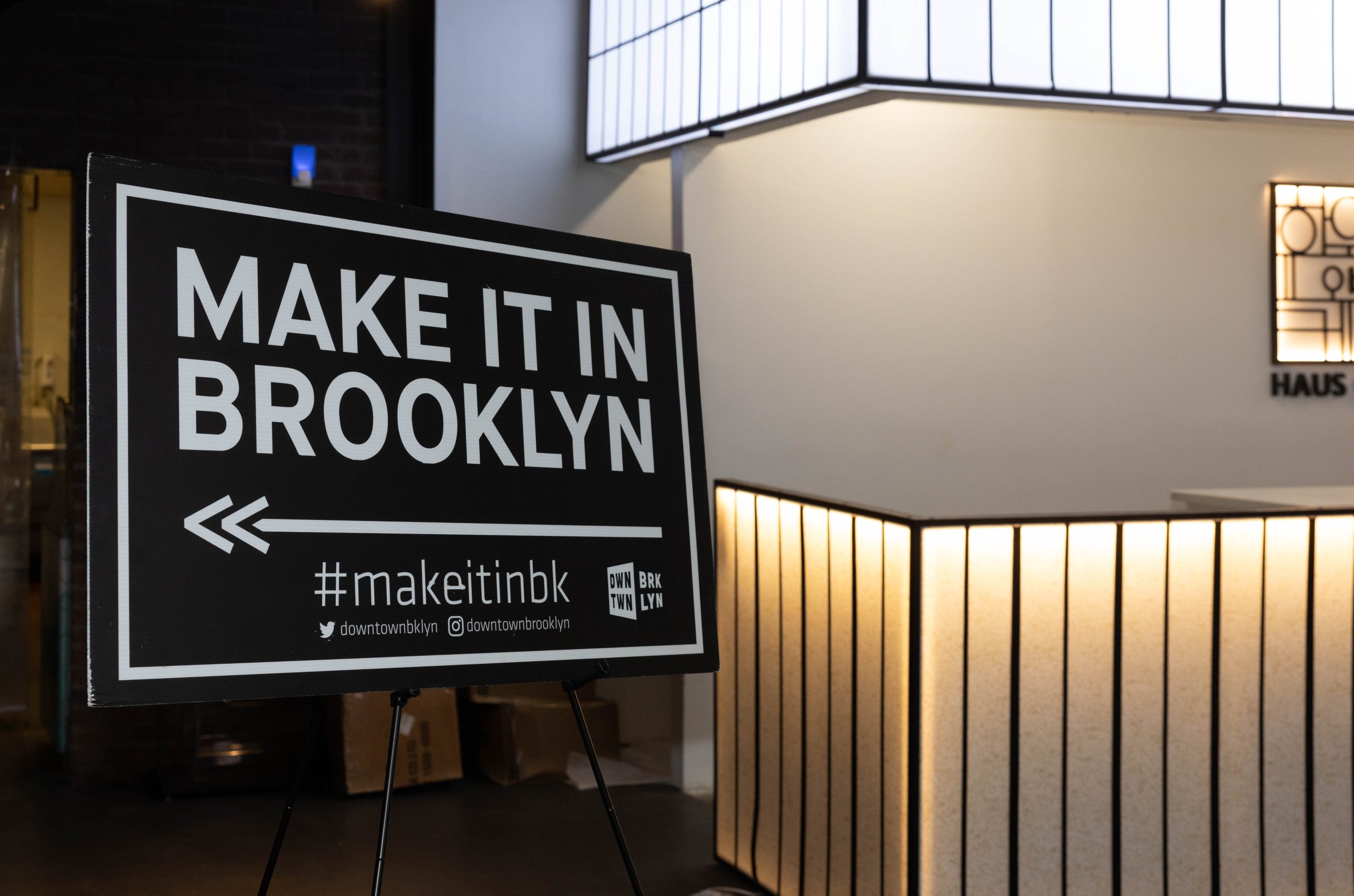
The entryway to he Make It In Brooklyn Grid Futures Event
On October 6, Downtown Brooklyn Partnership hosted Make It in Brookly Grid Futures Panel at Hana House, 345 Adams Street. Sponsored by Con Edison, the event brought together leaders from the utility, technology, investment, and economic development sectors to discuss the future of building electrification and the investments, technologies, and partnerships needed to support it.
Moderated by Jesse Weiss of NYC Economic Development Corporation, the panel featured Delvin Ellis of Con Edison, Ella Roseman of EnergyHub, and Matthew Horwitz of the Partnership Fund for New York City.

DBP President Regina Myer gives opening remarks
As Buildings Go Electric, the Grid Must Evolve
For Con Edison, the transition to electrification is already underway. Ellis discussed the planning and infrastructure investments required to accommodate growing electricity demand as buildings transition to electric heating and cooling. He pointed to the redevelopment of Willets Point in Queens, where new housing, all-electric buildings, and electric vehicle charging infrastructure are creating significant new demand, as well as projects such as the Brooklyn Clean Energy Hub, which will strengthen the city’s electric infrastructure.
While expanding the grid is essential, the panel also explored how existing energy resources can be used more efficiently. Roseman explained how EnergyHub works with utilities to operate virtual power plants, which connect technologies already found in homes and buildings, including smart thermostats, batteries, electric vehicles, and building management systems. During periods of high electricity demand, these resources can work together to reduce strain on the grid by adjusting thermostats, pausing EV charging, or releasing stored electricity from batteries. Customers can also receive financial incentives for participating, creating opportunities for buildings to actively support the grid rather than simply consume electricity.
This introduced one of the evening’s central themes: grid flexibility, or the ability to shift electricity consumption in response to changing grid conditions. Roseman illustrated the concept through everyday household activities, explaining how running appliances and charging electric vehicles at different times of day can help distribute demand more evenly. At a larger scale, coordinating these resources across thousands of buildings can help utilities manage peak demand and make better use of available electricity.

Grid Futures panelists
Moving From Innovation to Adoption.
Although many technologies needed to support electrification already exist, bringing them into widespread use presents different challenges. Horwitz, who invests in emerging companies through the Partnership Fund for New York City, discussed the difficulties startups face when moving beyond pilot projects. Demonstrating that a technology works is only the first step; convincing utilities, building owners, and other customers to adopt it requires trust, proven reliability, and a clear financial case. Partnerships between startups, utilities, investors, and government agencies can help promising solutions reach the market.
Financing is particularly important for New York City’s existing buildings, where electrification and energy-efficiency improvements can require substantial upfront investments. The panel discussed the challenge of aligning incentives between property owners and tenants, as landlords may be responsible for paying for improvements while residents benefit from lower energy bills or greater comfort. Horwitz highlighted Kelvin, a company developing radiator covers and building controls to improve heating efficiency in older buildings, as an example of technology that can deliver benefits without requiring a complete overhaul of existing systems.
Roseman emphasized the importance of combining financing options, state rebates, and utility incentive programs to make technologies such as residential batteries and solar installations more accessible. While these systems remain expensive for many households, smaller interventions such as smart thermostats can offer a more affordable starting point.

Making the Energy Transition Accessible
Audience questions brought the discussion back to the practical realities of living and working in New York City. Attendees asked how to encourage owners of older buildings to invest in electrification, what renters can do when they have limited control over their building’s energy systems, and how incentives can better reach the people who ultimately pay utility bills.
The conversation also addressed Local Law 97, which is helping drive demand for electrification, particularly in new construction, while retrofitting older buildings remains more challenging. Another audience member raised the importance of reducing energy demand before adding new electric loads, prompting a discussion about insulation, windows, and other efficiency improvements that can reduce the electricity needed to heat and cool buildings.
Even with these measures, electricity demand is expected to continue growing. Ellis noted that Con Edison is already seeing increased winter electricity demand as buildings transition to electric heating, creating new challenges for a system historically accustomed to summer peaks. The discussion also touched on the growing electricity needs of AI and data centers, with Ellis describing inquiries for large projects requiring substantial new capacity.
Making Clean Energy Work for Everyone
As the conversation came to a close, panelists emphasized that awareness remains a major barrier to adoption. Many energy-saving technologies, rebates, and utility programs are already available, but customers may not know about them or understand how they could benefit. Horwitz highlighted companies such as it’s electric, which works with property owners to expand access to EV charging, and PopWheels, which is developing battery-swapping infrastructure for electric delivery bikes, as examples of innovations that connect clean energy solutions with everyday needs.
The evening underscored that New York City’s energy transition is about more than replacing fossil fuels with electricity. It requires coordination among utilities, technology companies, investors, government agencies, property owners, and residents to rethink how energy is delivered, consumed, and managed. Through Make It in Brooklyn, Downtown Brooklyn Partnership continues to bring these stakeholders together to explore the technologies and ideas shaping the city’s future.
Through Make It in Brooklyn, Downtown Brooklyn Partnership continues to connect entrepreneurs, industry leaders, investors, and policymakers around the technologies and ideas shaping New York City’s future.