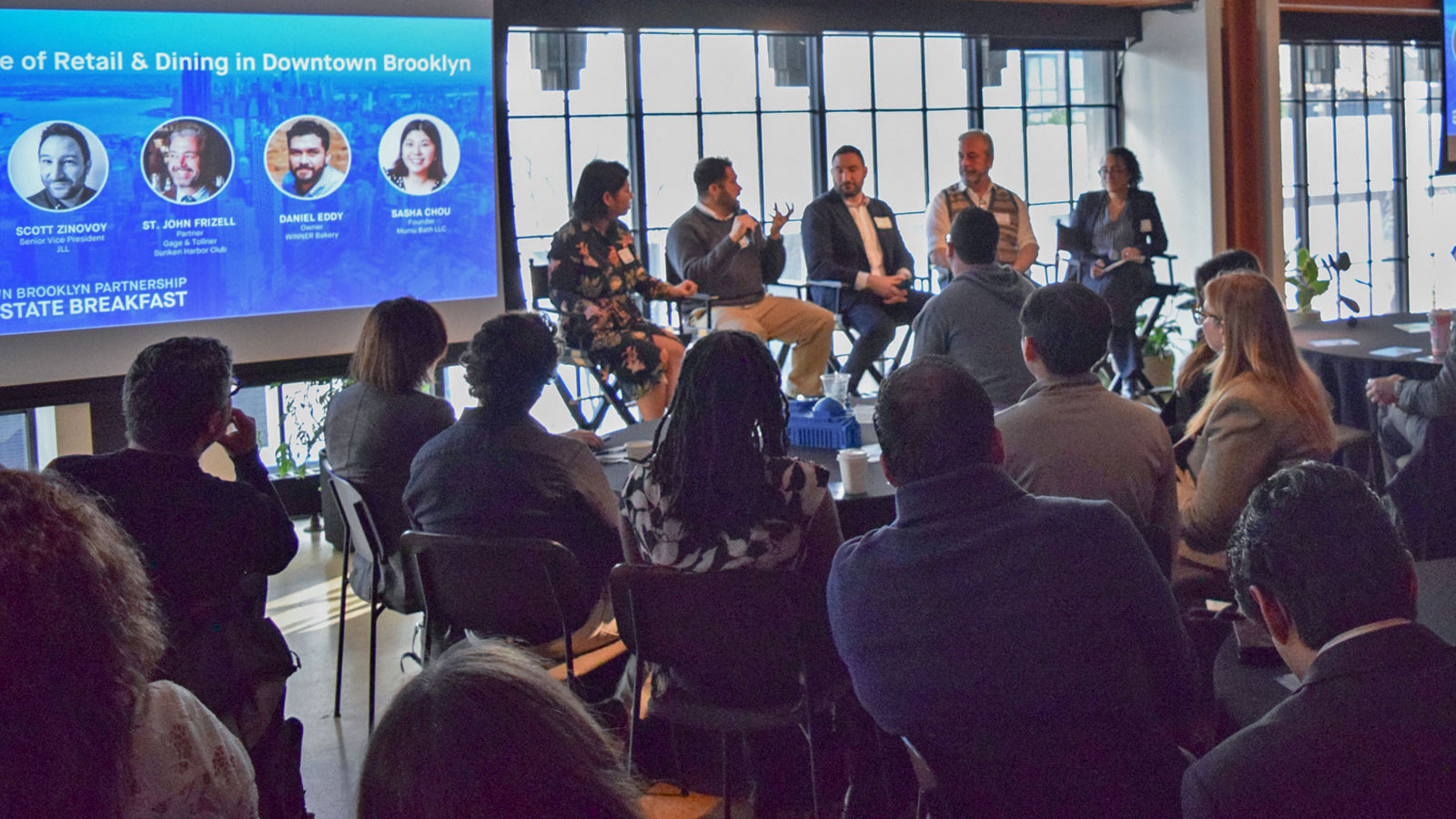
Downtown Brooklyn’s retail landscape is evolving, with new businesses, dining options, and entertainment concepts shaping the neighborhood’s next chapter. AI is changing how the real estate industry and the local economy works. At Downtown Brooklyn Partnership’s (DBP) Real Estate Breakfast 2026, industry leaders, business owners, and real estate professionals discussed the rapidly shifting landscape.
Opening the event at the Ace Hotel Brooklyn, DBP President Regina Myer highlighted DBP’s efforts to strengthen the district’s retail environment, including its Strategic Retail Plan with Streetsense, new Storefront Improvement Program, Retail Ready program, and partnership with Urban Umbrella. Council Member Lincoln Restler highlighted Downtown Brooklyn’s growing residential population, approaching 30,000 units since the 2004 rezoning, and his commitment to working with DBP to attract new retail partners and support local businesses.

Panel: The Future of Retail & Dining in Downtown Brooklyn
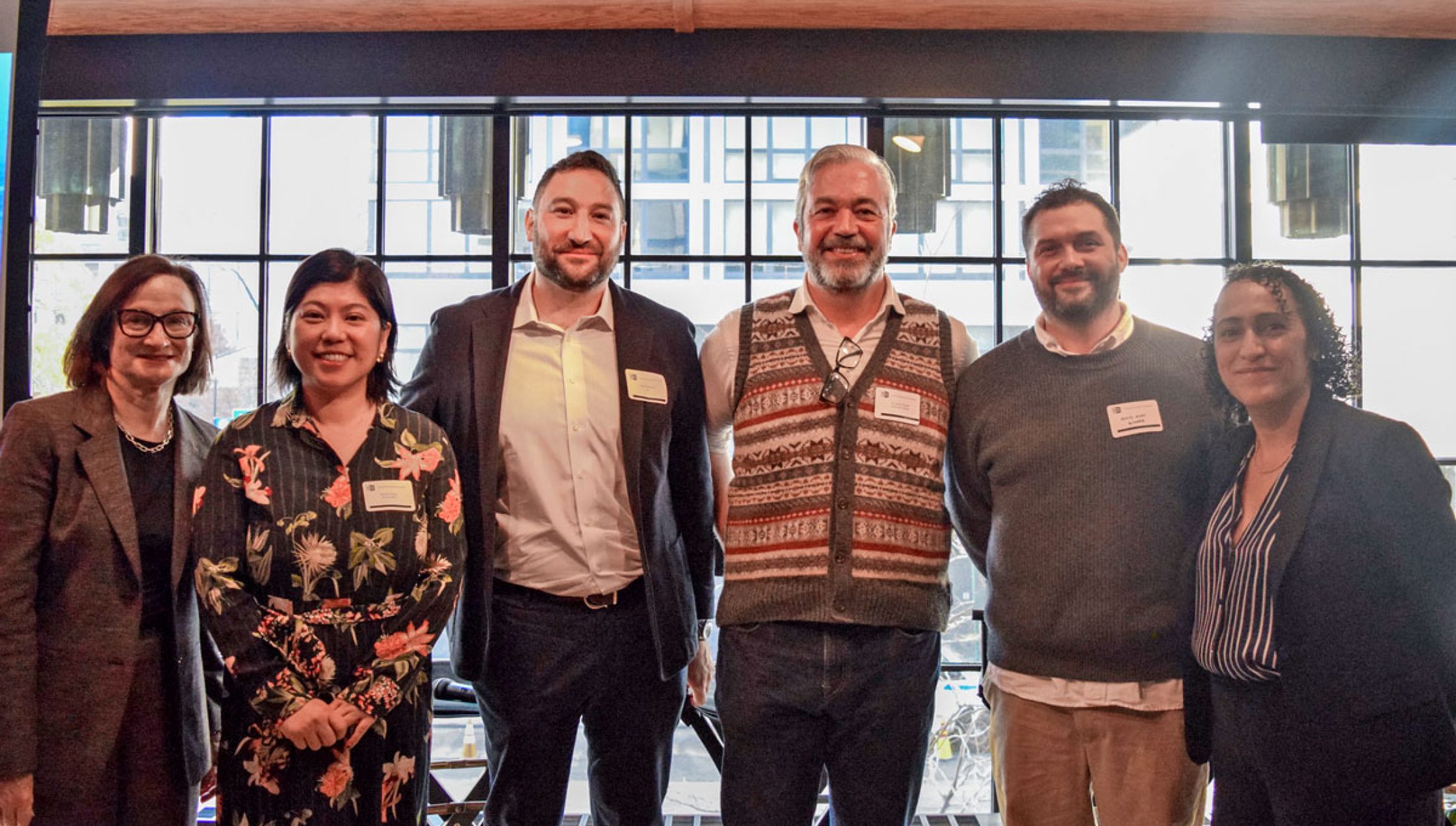
DBP President Regina Myer, Sasha Chou (Mumu Bath), Scott Zinovoy (JLL), St. John Frizell (Gage & Tollner), Daniel Eddy (WINNER Bakery), Larisa Ortiz (Streetsense)
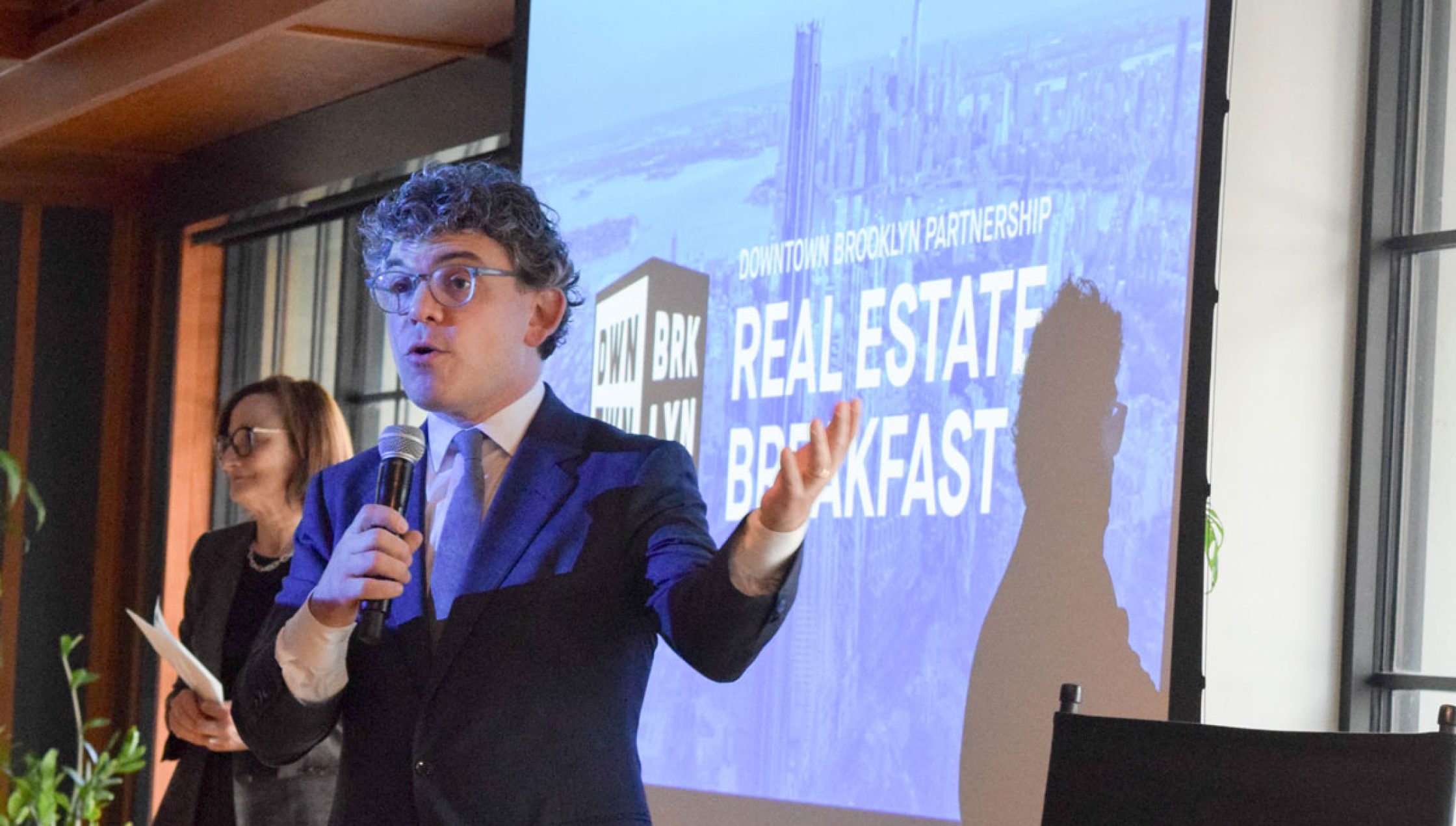
Opening remarks by DBP President Regina Myer and Council Member Lincoln Restler
Reimagining Downtown Brooklyn: Retail, Dining and the Future of the Neighborhood
Moderated by Larisa Ortiz, Managing Director at Streetsense, the first panel featured Sasha Chou, Founder of Mumu Bath; Daniel Eddy, Owner of WINNER Bakery; St. John Frizell, Partner at Gage & Tollner and Sunken Harbor Club; and Scott Zinovoy, Senior Vice President at JLL.
Larisa, who worked with DBP on its Strategic Retail Plan, highlighted Downtown Brooklyn’s retail potential: approximately 3.2 million square feet of retail space within walking distance and access to 13 subway lines, featuring many retail corridors of distinct characteristics and offerings. Serving varying profiles of residents, workers, students, and visitors, Downtown Brooklyn is a “district of districts.”
For Sasha and Daniel, both of whom recently opened second locations in Downtown Brooklyn, the growing residential population and sense of community were significant draws. Sasha shared that after considering nearly 30 locations, she chose Downtown Brooklyn, seeing a natural fit between Mumu Bath’s natural products and a community increasingly interested in wellness. She also highlighted challenges facing independent retailers, including permitting requirements, signage regulations, and associated costs.
Daniel explained how an invitation from Alloy Development led to WINNER Bakery’s second location at the Alloy Block. For him, it was a chance to join a close-knit community with a landlord clearly invested in neighborhood connections.
St. John echoed the importance of independent businesses in shaping neighborhood identity. Gage & Tollner, which first opened in 1879, continues to attract loyal patrons, some visiting multiple times a week. He hopes to see more independent restaurants and bars open in Downtown Brooklyn. Sasha, St. John, and Daniel all emphasized the importance of supportive landlords in helping to make that happen.
Looking ahead, Scott discussed BKX, an experiential retail concept planned for the former Macy’s space at 422 Fulton Street. Slated to open in 2027, the 440,000-square-foot project will bring together approximately 8–10 tenants, to create something distinctive and authentic rather than replicate a traditional big-box retail model. He pointed to Downtown Brooklyn’s strong residential and daytime populations, alongside landlords with a long-term investment in the neighborhood, as key competitive advantages.

Panel: Applied AI in Real Estate

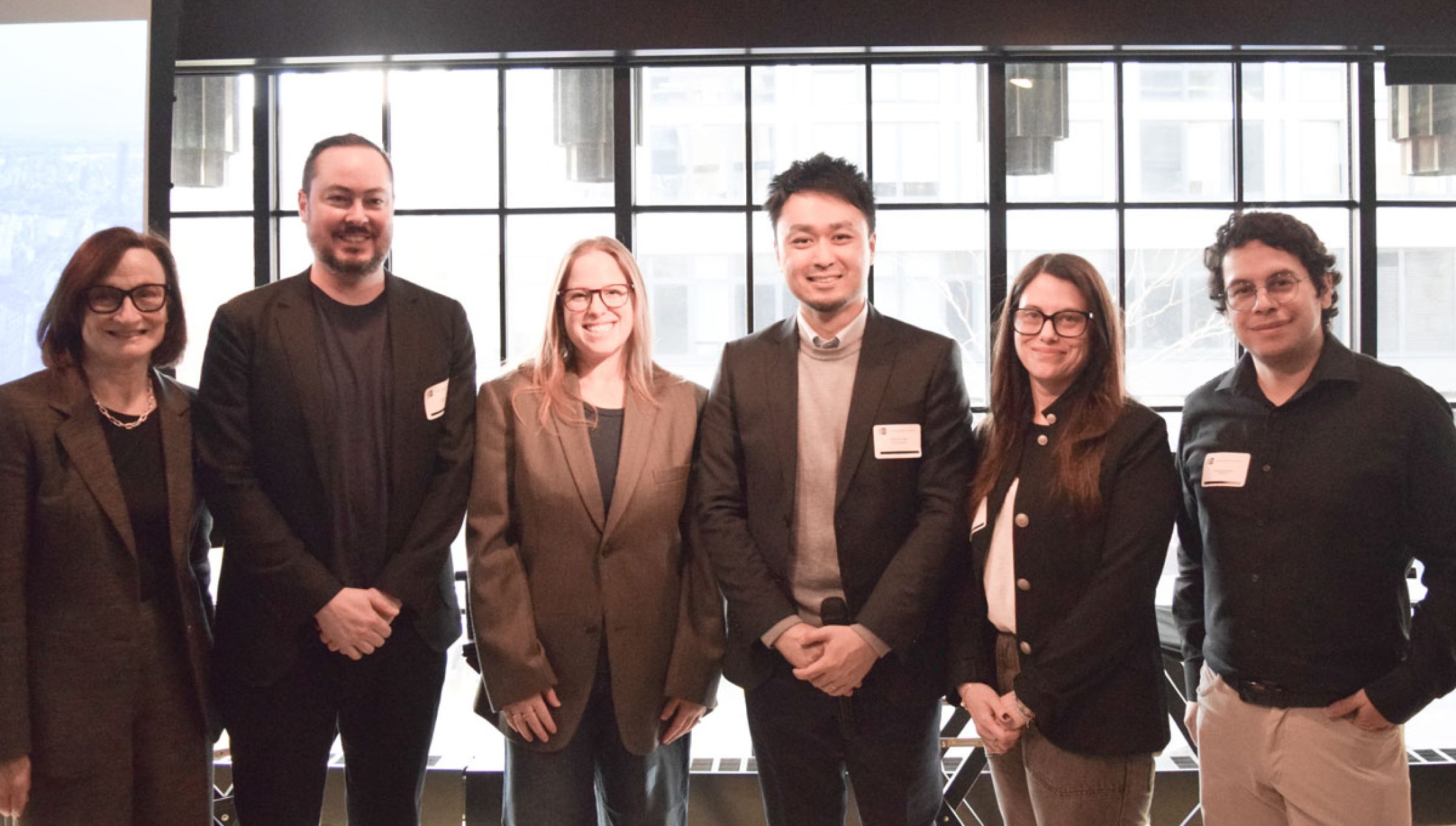
DBP President Regina Myer, Luc Wilson (KPF), Alyssa Zahler (Two Trees), Takahiro Yabe (NYU Tandon), Emily Levin (Axcces), Daniel Escobar (xFigura)
Applied AI in Real Estate: How Data and Technology Are Shaping What’s Next
The panel explored how AI is reshaping real estate, from design and development to retail planning, leasing, and housing access. Moderated by Luc Wilson, Global Director of Design Technology at KPF, the discussion featured Takahiro Yabe, Assistant Professor at NYU Tandon; Alyssa Zahler, Managing Director of Commercial Leasing at Two Trees Management; Emily Levin, Co-Founder and CEO of Axcces; and Daniel Escobar, Head of Research and Development at xFigura, an AI-focused architecture and technology company.
Alyssa discussed AI’s role in real estate operations and the growth of emerging industries. Most notably, AI has produced new demand for office space in their portfolio, especially at Two Trees’ Refinery at Domino, the Williamsburg office building that has attracted approximately 25 AI companies. Two Trees very intentionally hosts AI demo nights with Tech:NYC, drawing 200+ attendees (and potential tenants). Internally, AI has cut the time needed to analyze tenant feedback and identify recurring issues from about a week to just 15 minutes. These efforts offer an interesting connection to Downtown Brooklyn, where NYU Tandon and City Tech, alongside an emerging technology and business community, create opportunities to connect research, entrepreneurship, and neighborhood development.
Professor Yabe highlighted NYU Tandon students’ collaboration with DBP through capstone projects focused on developing an AI-powered simulation tool, which he described as a “SimCity for Downtown Brooklyn.” The project uses anonymized real-world mobility data to model a synthetic population of 20,000 AI agents. The tool simulates how different populations interact with local businesses and how new businesses or other developments could influence neighborhood activity. The framework aims to help property owners and developers test scenarios, reduce investment uncertainty, and make informed decisions.
Daniel discussed how xFigura’s AI-powered platform for architects and designers supports ideation, design, and collaboration throughout the project lifecycle. However, he stressed that AI does not replace the critical thinking and decision-making central to architecture. Luc, whose firm KPF uses xFigura’s platform, agreed, noting that real estate remains in the early stages of AI adoption. Moving beyond traditional processes will require new technology, education, guidance, and a shift in how professionals approach their work.
Emily echoed the challenges of AI adoption in real estate, highlighting how Axcces uses the technology to connect affordable housing applicants with available units by streamlining document processing and eligibility assessments. In a city facing significant housing demand, the platform helps bridge the gap between people seeking homes and vacant units.
Professor Yabe closed with an important reminder: AI should enhance, not replace, human capabilities. As the technology becomes increasingly embedded in our work, preserving creativity, individual perspectives, and independent thinking will remain essential.
